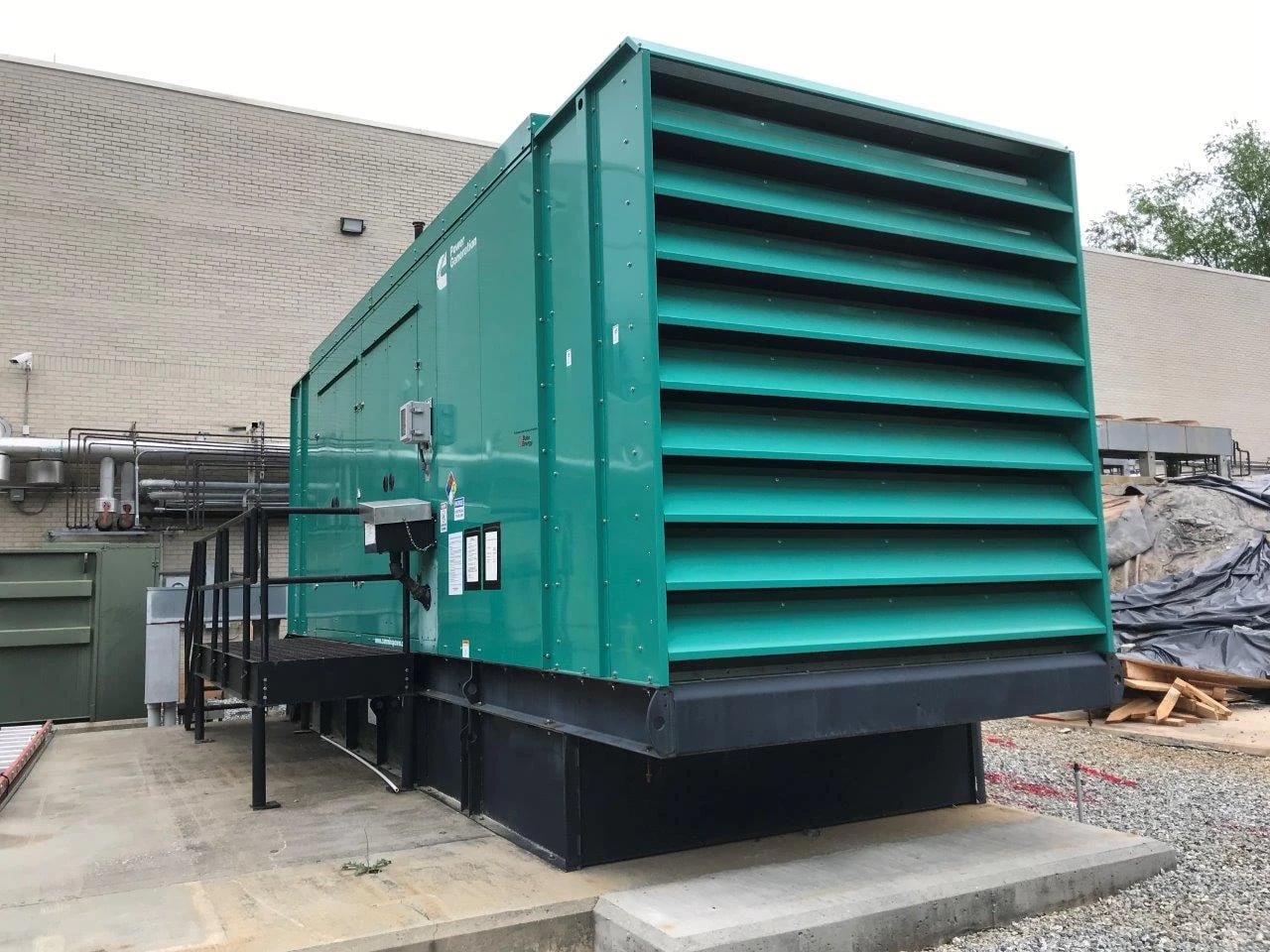
Estimate the Generator Size for Your Load
A generator for a mine is sized on more than the total of its motor ratings. Large motors draw several times their running current when they start, and a set that runs close to its full rating all day wears faster and leaves no room for an extra pump. Our generator sizing calculator takes a list of your loads, allows for how each motor starts and keeps the set at or below 80% of its rating, giving a first kVA figure in a minute.
Use that figure to start the conversation, not to finish it. Send the load list with the operating hours and the largest motor’s starting method, and the supplier will confirm the size, fuel use and whether a soft starter or variable-speed drive on the largest motor would let you buy or hire a smaller set. For the wider comparison of diesel, grid and hybrid supply, see our off-grid mine power guide.
Diesel Generator for Mining Specifications
The figures below describe typical industry specifications for this class of equipment rather than a single fixed model. Use them to scope a requirement, then confirm exact figures against the supplied unit before purchase.
| Specification | Typical value |
|---|---|
| Common ratings | 20–2,000 kVA for mine site duty |
| Output voltage | 400 V 3-phase 50 Hz |
| Power factor | 0.8 lagging standard |
| Duty ratings | Prime, continuous (COP) or standby (ESP) |
| Fuel consumption | 0.25–0.30 L/kWh at 75% load |
| Optimal load band | 50–80% of rating |
| Motor starting allowance | Size for 6–7× FLC on direct-on-line starts |
| Enclosure | Open skid or acoustic canopy, 65–75 dB(A) at 7 m |
| Fuel tank | Base tank for 8–24 h running; bunded bulk storage separate |
| Control | Auto mains failure, auto start-stop, remote monitoring |
| Paralleling | Multiple sets synchronised for load sharing and redundancy |
| Service interval | 250–500 h oil and filter change |
Diesel Generator for Mining: Uses and Applications
- Primary power for off-grid processing plants
- Standby supply where grid is unreliable
- Exploration camp and drilling programme power
- Dewatering pump supply during wet season
- Workshop and accommodation power
Maintenance Schedule
Most premature failures in this equipment class trace back to a missed routine check rather than a design fault. The intervals below are a practical starting schedule; adjust them to your duty cycle and the manufacturer manual.
| Interval | Task |
|---|---|
| Daily | Check oil and coolant levels, fuel level and any leaks; record running hours and load. |
| Weekly | Test standby sets under load, not on no-load. A set that starts but cannot take load has not been tested. |
| 250–500 h | Engine oil and filter change; air and fuel filter inspection. |
| Monthly | Drain water from the fuel-water separator; check battery condition and charger operation. |
| Annually | Coolant change, injector service, alternator insulation test and full load bank test. |
Frequently Asked Questions
How do I size a generator for a mine site?
Total the running load, then check the starting requirement of the largest motor separately. A direct-on-line start draws six to seven times full-load current, and that transient sets the minimum generator size far more often than the steady-state load does. Soft starters or variable-frequency drives cut the requirement substantially.
What happens if a generator runs lightly loaded?
Sustained running below about 30% load causes wet stacking, with unburnt fuel and carbon glazing the cylinder bores and fouling the exhaust. It progressively destroys the engine. Where load is genuinely low, use a smaller set, parallel multiple sets and shut some down, or apply a load bank.
How much fuel will a generator use?
Roughly 0.25–0.30 litres per kWh generated at 75% load. As a worked assumption, a 500 kVA set at power factor 0.8 and 75% load delivers 300 kW, giving about 75–90 litres per hour at that fuel rate. Confirm the actual model fuel curve before budgeting. Over a month of continuous running the fuel bill dwarfs the capital cost of the generator, which is why load management matters so much.
Is it better to run one large generator or several smaller ones?
Several smaller sets in parallel is usually better for a mine. Load varies through the shift, so you can run only what is needed and keep each set in its efficient band; you gain redundancy; and you can service one without shutting the site down. The trade-off is more complex synchronising controls.
Supply and Delivery Across Tanzania
Bart Mining supplies diesel generator for mining and related equipment to mining operations throughout Tanzania, with primary coverage of the Lake Victoria Goldfields (Mwanza, Kahama, Geita, Shinyanga and Bukombe), alongside the Lupa Goldfields around Chunya and Mbeya, and delivery nationwide from Dar es Salaam.
Commonly supplied to: Chunya, Shinyanga, Singida, Nzega and Igunga, Mpanda, Dar es Salaam.
Manufacturer or supplier of this equipment? Bart Mining sells machinery like the diesel generator for mining to buyers across Tanzania through its local market partnership.