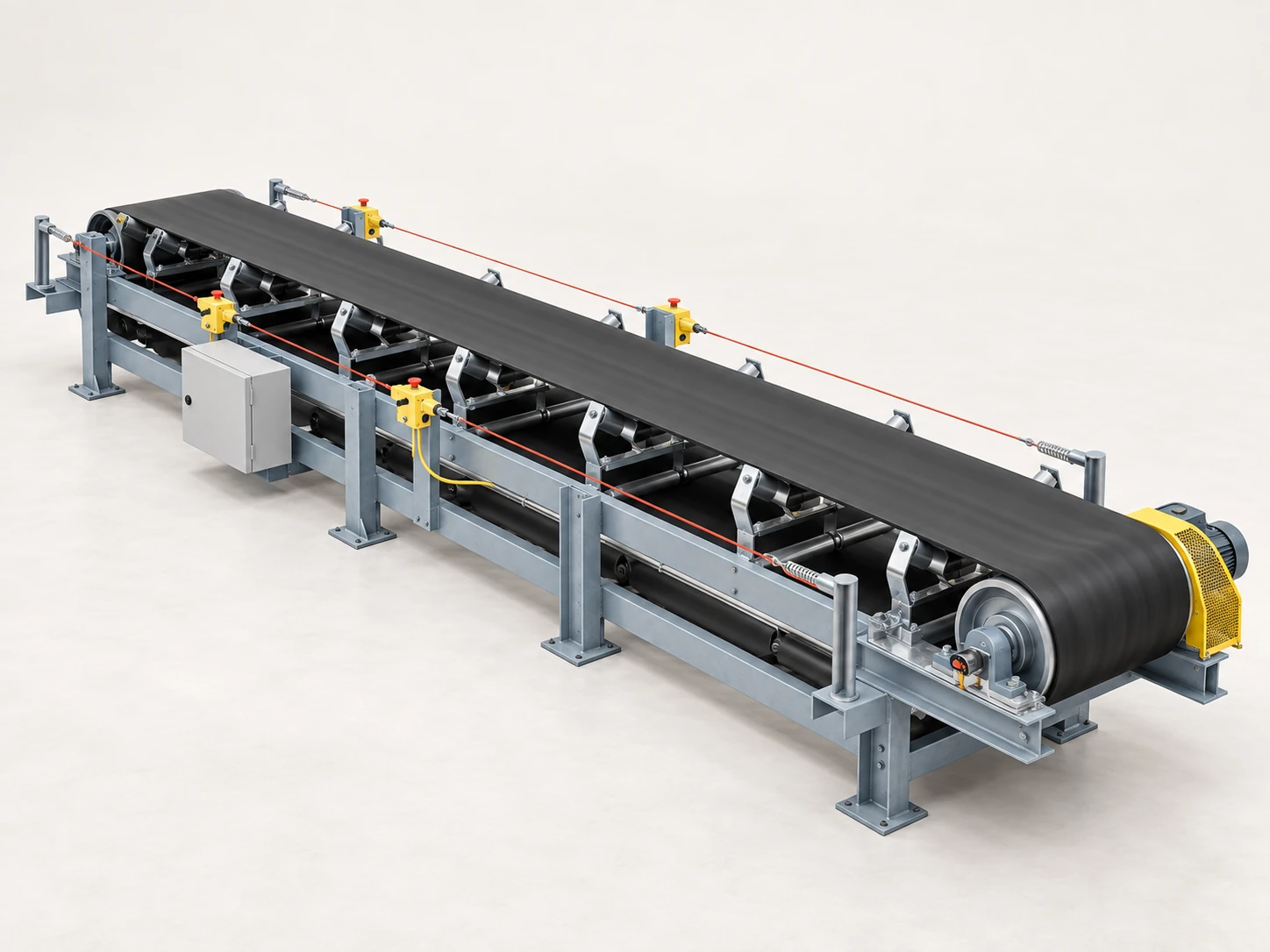
Belt Conveyor Specifications
The figures below describe typical industry specifications for this class of equipment rather than a single fixed model. Use them to scope a requirement, then confirm exact figures against the supplied unit before purchase.
| Specification | Typical value |
|---|---|
| Common belt widths | 500, 650, 800, 1000, 1200 mm |
| Belt speed | 0.8–2.0 m/s; 1.0–1.5 m/s typical on small plants |
| Troughing | 20°, 35° or 45° three-roll idlers |
| Belt type | EP fabric, 3–5 ply; steel cord on long overlands |
| Drive | Head drum, lagged; 4–45 kW on plant conveyors |
| Take-up | Screw on short conveyors; gravity on longer ones |
| Inclination | Up to about 18° on a troughed belt without cleats |
| Idler spacing | 1.0–1.2 m carrying; 3 m return |
| Protection | Pull-cord, belt-sway, under-speed and belt-rip detection |
Belt Conveyor: Uses and Applications
- Jaw to cone and cone to screen transfers
- Mill-feed and stockpile stacking
- Overland haul from pit to plant
- Loading bins and hoppers
- Waste and aggregate stacking
Maintenance Schedule
Most premature failures in this equipment class trace back to a missed routine check rather than a design fault. The intervals below are a practical starting schedule; adjust them to your duty cycle and the manufacturer manual.
| Interval | Task |
|---|---|
| Every shift | Walk the belt: tracking, spills, seized idlers, splice condition and that pull-cords work. |
| Weekly | Grease drive and tail bearings; check take-up travel remaining; inspect chute liners. |
| Monthly | Idler survey — seized idlers start fires and rip belts; replace on the spot. |
| Quarterly | Lagging, scraper and skirt inspection; belt-thickness and splice survey. |
| On splice | Hot or cold vulcanised splices outlast mechanical fasteners on any belt that runs continuously. |
Frequently Asked Questions
What belt width do I need?
From the t/h, the bulk density and the speed. A 650 mm belt at 1.2 m/s is the small-plant default and handles most 50–150 t/h crushing circuits. Going narrower and faster spills; going wider than you need costs idlers and structure for life. Size on surge, not on average.
Why does my belt run off to one side?
Loading off-centre is the usual cause, then seized idlers, then a tail drum that is not square. Track the belt with the training idlers only after the loading chute is putting material on the centreline. Chasing a tracking problem with the tail drum while the chute is skewed just walks the belt off the other way.
When do I need cleats or a chevron belt?
When the incline exceeds about 18° for smooth belts on crushed rock. Chevron profiles add a few degrees. Steeper than that is a pocket belt or a different layout. Do not steepen a smooth conveyor and hope — it will roll back the moment the feed gets coarse or wet.
Supply and Delivery Across Tanzania
Bart Mining supplies belt conveyor and related equipment to mining operations throughout Tanzania, with primary coverage of the Lake Victoria Goldfields (Mwanza, Kahama, Geita, Shinyanga and Bukombe), alongside the Lupa Goldfields around Chunya and Mbeya, and delivery nationwide from Dar es Salaam.
Manufacturer or supplier of this equipment? Bart Mining sells machinery like the belt conveyor to buyers across Tanzania through its local market partnership.