In this article
A drilling programme should test a geological question and provide samples suitable for the decision that follows. Paying for metres without specifying geometry, sample quality and data handling can leave a project with holes that are difficult to interpret. Method selection comes from the information needed, not simply the lowest rate.
This guide explains how to brief drilling work in Tanzania and compare complete contractor scopes. It covers core and reverse-circulation methods, sample controls and the deliverables needed to turn drilling into a usable geological model.
Choose the sample type for the question
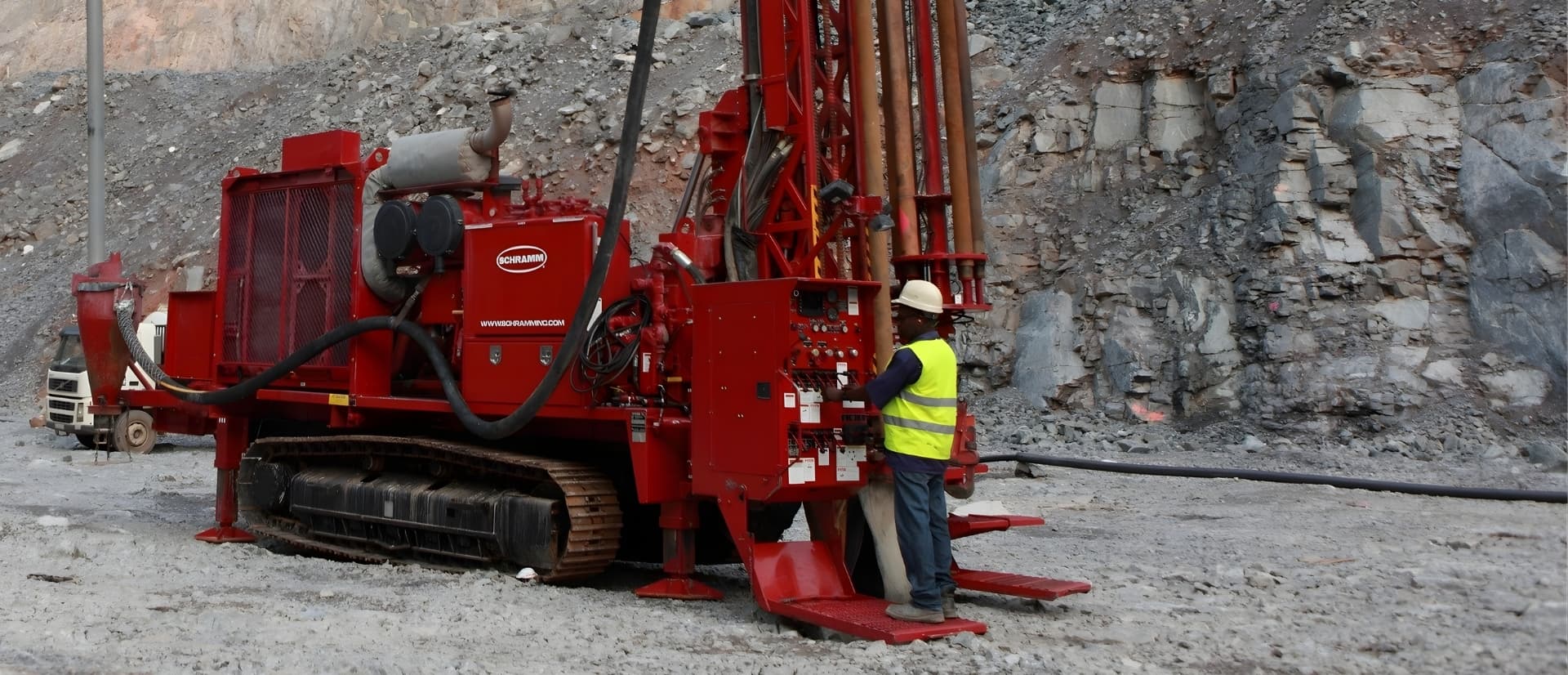
Diamond drilling produces core that can support geological, structural and geotechnical observations where recovery and procedures are appropriate. Reverse circulation, or RC, produces cuttings for sampling and logging. Ground conditions, water, depth and the required information affect which method or combination suits the programme.
Boart Longyear’s RC overview and coring guidance provide method references. They do not establish a universal speed or cost advantage for every site. Ask contractors to explain suitability and sample risks for the actual ground.
Design holes around geometry
Provide the target model, proposed collars, orientations, depths and access constraints. A hole intersecting a vein at a shallow angle can produce a long downhole interval that is not the true mineralised width. Survey information and structural interpretation are needed to understand that result.
For an illustrative early campaign, six holes at 150 m each total 900 m. That arithmetic is a scope, not proof the spacing will define a resource. State what each hole tests and which result would justify a second stage.
Plan sample handling at the rig
Agree recovery records, core handling, photography, logging and sampling methods before mobilisation. For RC, specify collection, moisture records, splitting and contamination checks. Track each sample from its interval to dispatch and laboratory receipt.
Design QA/QC with the responsible geologist and assay laboratory, including standards, blanks, duplicates and investigation rules. Our assay guide explains why sample preparation and analytical quality are different parts of that process.
Compare the whole campaign cost
Request rates by method, depth and relevant ground condition, together with mobilisation, standby, casing, consumables, surveys, water, fuel, crew support and rehabilitation. Clarify who supplies pads, access, permits and security. A metres-only rate omitting those duties is not comparable with a complete campaign quote.
Using the assumed 900 m campaign, an illustrative USD 80/m drilling allowance is USD 72,000. Adding assumed USD 10,000 mobilisation and USD 18,000 for site and sample support gives USD 100,000 before contingency and other exclusions. These are teaching figures, not a Tanzanian drilling offer or a reliable estimate for your site.
Agree how the results will be handed over
Require collar and downhole surveys, daily records, recoveries, geology, sample intervals, assay certificates, QA/QC review and a documented interpretation. Confirm data formats, coordinate systems and ownership of core, samples and records. The interpretation should distinguish observations from hypotheses.
Update the model after each agreed stage. If the first holes contradict the target geometry, revising the programme can be more useful than continuing every planned metre unchanged.
Questions and answers
Should I always choose the drilling method with the lowest price per metre?
Choose the information and sample quality needed first, then compare complete campaign costs. Core and RC provide different forms of evidence, and ground or water conditions can affect results. Include supervision, surveys, sampling, laboratory work and rehabilitation so a cheaper drilling rate does not leave an incomplete programme.
What should happen if sample recovery or quality deteriorates during drilling?
Use the quality and change-control procedure agreed before mobilisation. Record the affected intervals and conditions, have the responsible geologist assess the results, and decide what corrective work is needed. Preserve the original records and flag limitations rather than treating every drilled metre as equally reliable data.
Buy a geological test with controlled data
Select the method from the sample requirement, design holes to test the target and compare complete costs. Arrange supervision and data controls before the rig arrives. The next step is a drilling brief stating what the campaign must answer and how the result will guide further spending.
Sources and assumptions
Method references were reviewed on 5 October 2026. Hole counts and budget figures are illustrative. No contractor availability, penetration rate or reporting qualification is guaranteed.