In this article
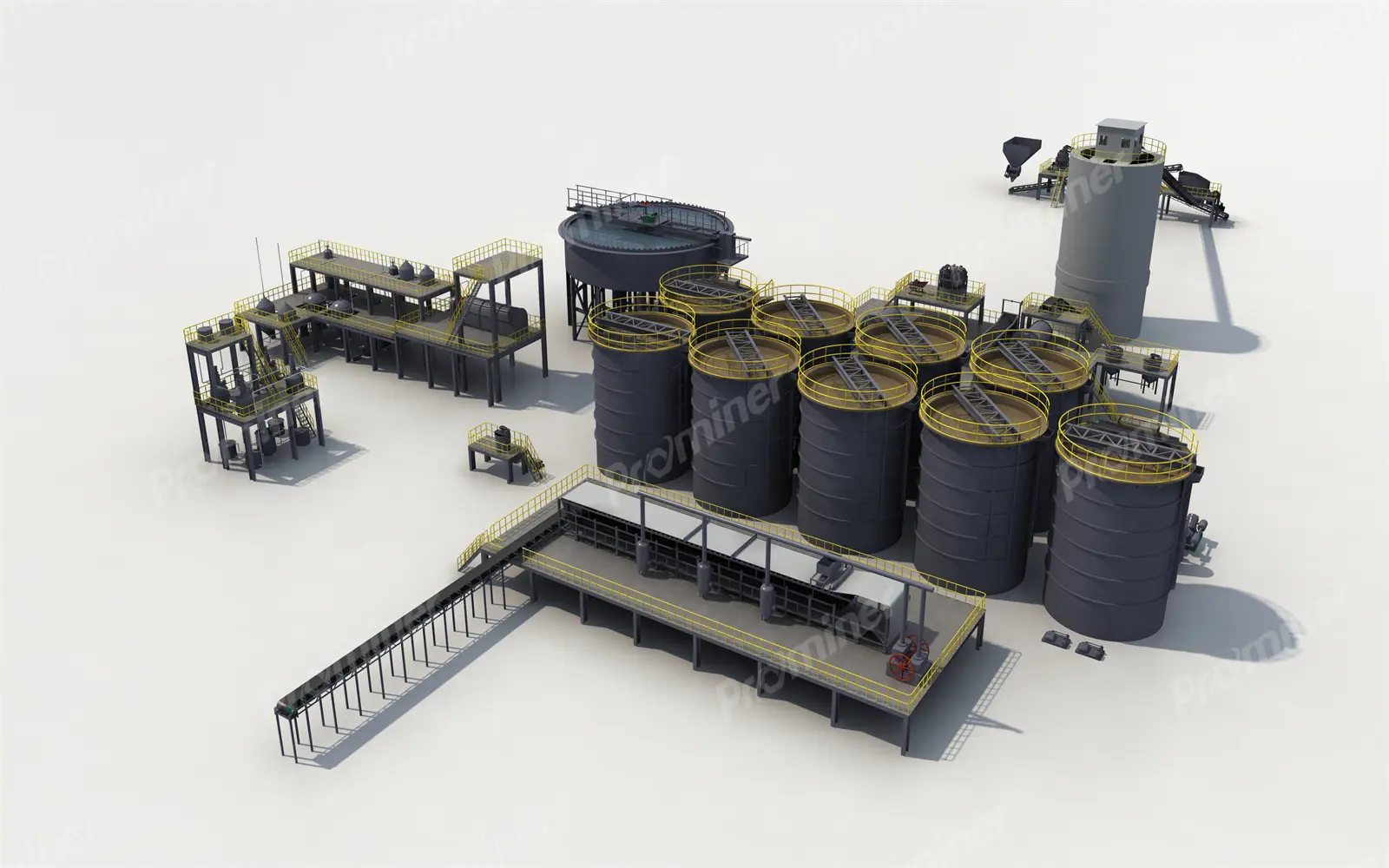
A small CIP or CIL plant is a processing system, not simply a row of tanks. Prepared ore must enter at a controlled rate, gold must dissolve and reach carbon, and loaded carbon must become a saleable product. Water, residue handling, power and operator routines are part of that same system.
This guide helps an owner turn daily tonnage and test results into a coherent plant brief. It explains what to specify and demonstrates a first volume calculation, without presenting a universal tank size or a minimum tonnage that makes every project profitable.
Establish the feed before the equipment list
Confirm tonnes per day, operating hours, grade variability, ore types and the preparation needed. For old tailings, establish ownership, previous treatment and contaminants as well as grade. The SGS gold-processing overview explains the role of test work in choosing treatment routes.
Request leach response over time, reagent consumption, slurry behaviour and carbon-adsorption information. A final extraction percentage does not show whether the planned residence time, carbon inventory and screens will work at the intended flow.
Connect the duties in the circuit
CIP separates leaching from carbon adsorption; CIL combines them in the leaching circuit. The selected configuration needs coordinated feed preparation, tanks and agitation, carbon retention and transfer, loaded-carbon handling, elution or an agreed toll route, and residue management.
Prepare a concept sequence: feed preparation → leaching/adsorption → loaded-carbon recovery → elution and goldroom; the residue stream goes to its designed treatment and containment route. This describes process relationships, not a construction drawing. The designer must show every stream, recycle and utility in the engineering documents.
Calculate working volume from slurry flow
For an illustrative 50 dry t/day operation running continuously, assume 40% solids by mass, solids density 2.7 t/m³ and water density 1 t/m³. Daily water is 50 × (1 − 0.40) / 0.40 = 75 t, or 75 m³. Solids occupy about 50 / 2.7 = 18.52 m³, giving approximately 93.52 m³ of slurry per day, or 3.90 m³/h.
At an assumed 24-hour residence time, the first working-volume estimate is 3.90 × 24 = 93.6 m³, with rounding. This is not a gross vessel size, a residence-time recommendation or a complete design. Freeboard, mixing, carbon duty, flow distribution, availability and changes in slurry density still need engineering assessment.
To repeat this calculation with your own tonnage, slurry density and leach time, use our leach tank volume calculator.
Budget for steady operation
Build a load list for milling, agitation, pumps, air supply and auxiliary equipment. Confirm water quality and makeup demand, carbon supply, reagent logistics and laboratory support. Include screens, seals, liners, wear parts and planned maintenance in the operating estimate.
Use measured or tested consumption rather than a standard reagent allowance copied from another mine. The consumables guide explains what a procurement specification should contain.
Plan cyanide destruction before tailings leave the circuit
Tailings leaving a CIP or CIL train still contain cyanide, and the plant needs a defined way to reduce it before the slurry reaches the tailings facility. That is usually a detoxification stage at the end of the tank train, sized and designed by a process specialist for your ore, water and discharge limits. Industrial plants use several destruction methods, and the right one depends on the chemistry of your tailings, the reagents you can obtain reliably on site and the limits in your environmental approval.
For the owner, the planning questions are practical. Leave space and power in the layout for the detox tanks, budget for their reagents and monitoring, and agree with the designer which cyanide measurement will show compliance, how often it is sampled and who records it. Decide what happens if a reading is high: whether slurry can be held or recirculated rather than sent to the facility. This guide does not give operating settings; those belong to the plant’s approved design and procedures, with the Cyanide Code as a management reference. The leaching tank page lists detoxification among the tank duties.
Resolve approvals and handover criteria
Confirm the activity’s licensing, environmental, chemical and waste requirements before construction. The Cyanide Code is a useful management reference for cyanide facilities, alongside applicable national requirements and specialist procedures.
Agree what commissioning will demonstrate: flow, stable operation, sampling, carbon accountability, operator training and complete documentation. Define how performance will be measured on agreed feed and how defects will be handled. A brief run without a reconciled balance is not proof of sustained recovery.
Questions and answers
Can I use this guide's working-volume example to order tanks?
It is an initial calculation using assumed flow and residence time. It does not specify gross vessel sizes, mixing, freeboard, carbon management or operating availability. Give the engineer your actual slurry properties, test results and feed schedule so the complete circuit can be designed before equipment is ordered.
What should a plant performance test measure?
Agree the feed basis, duration, sampling, throughput and recovery measurement before commissioning. Include inventories, carbon accountability, utilities and the route to final product, rather than relying on visible gold or a brief run. The acceptance record should also identify training, documentation and any defects that remain to be resolved.
Specify an operable circuit
Use feed evidence and test results to specify the complete path from prepared ore to payable gold and managed residue. Treat the preliminary volume calculation as a starting check, then have the duties engineered together. The next step is a process brief containing the feed schedule, slurry assumptions, test reports, utilities and proposed handover criteria.
Sources and assumptions
Technical references were reviewed on 5 October 2026. All volume inputs are illustrative; this guide does not set chemical controls or equipment operating limits.