
In this article
An elution plant takes gold loaded onto carbon toward a saleable product, but a quoted column price rarely covers that complete route. The useful budget includes carbon handling, stripping, electrowinning, goldroom work, utilities and the site work needed to operate the system.
This guide shows what to include in a quotation and how to compare owning a facility with using a toll processor. No current model-specific elution quotation is published here. The worked budget is explicitly assumed so you can replace its lines with real offers.
Define what the supplier is supplying
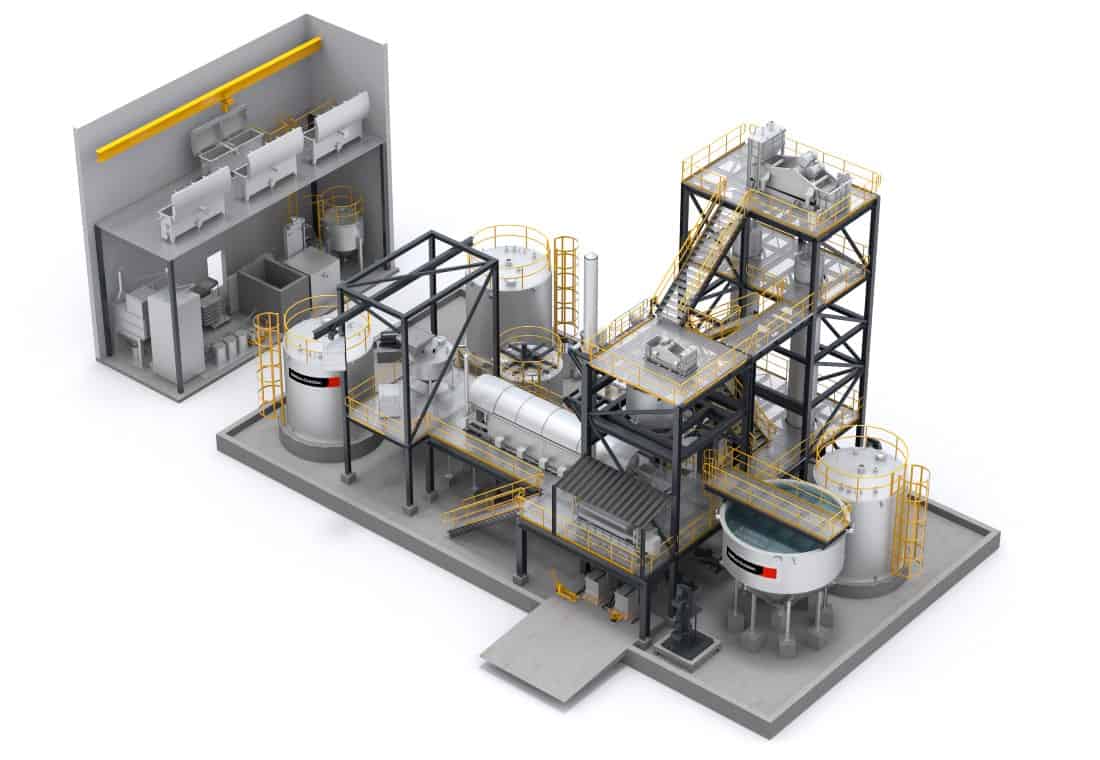
Metso’s elution and goldroom description connects loaded-carbon stripping, electrowinning and smelting, with carbon treatment and supporting utilities. It illustrates why “elution plant” needs an itemised scope rather than a single vessel photograph.
State carbon batch size, loaded-carbon assay range, intended batches per month and the process selected by the designer. Ask which carbon preparation, heating, solution circulation, electrowinning, goldroom, regeneration and treatment duties are included. Identify any duties sent to another facility.
For the equipment itself, our elution and electrowinning plant page explains the AARL and Zadra processes and their main components, and the CIL and CIP plant page covers the circuit that loads the carbon.
A planning budget with visible exclusions
For an illustrative small facility, assume USD 80,000 for the defined process package, USD 15,000 for delivery, USD 25,000 for site works and utilities, and USD 10,000 for engineering and startup. The subtotal is USD 130,000. An assumed 10% construction contingency adds USD 13,000, taking the planning capital to USD 143,000.
Those numbers are editorial assumptions, not supplier prices, a Chunya quotation or an installed-project observation. They exclude taxes, land, upstream plant equipment and working capital. Scope omissions can matter more than the price variation, so each real offer must be reconciled against the same equipment and services list.
Size around carbon flow and inventory
Ore tonnage alone does not define elution duty. Carbon loading, batch size, turnaround, operating availability and storage determine the work the facility must do. Have the process designer check whether the batch schedule can clear loaded carbon without creating an increasing backlog.
For a simple scheduling example, assume the upstream circuit sends four carbon batches a month. A facility scheduled for only three batches would add one batch to inventory each month before considering interruptions. The remedy may be a different schedule, capacity or external arrangement; it cannot be chosen from daily ore tonnage alone.
Compare ownership with toll treatment
Obtain toll terms covering custody, transport, sampling, payable recovery, all charges, turnaround and disputes. Reconcile carbon received, gold recovered and carbon returned. A headline fee does not show whether assay differences or a slow settlement leave you with a larger cash burden.
As assumed arithmetic, if a verified owned operation would cost USD 3,000/month before capital and a comparable toll service costs USD 1,200 per batch, four batches cost USD 4,800. The USD 1,800 difference is only an operating comparison. Ownership still needs capital, staffing, maintenance, approvals and adequate utilisation; low batch volumes can change the answer.
Plan utilities, competence and acceptance
Confirm water quality, heating and power, ventilation, containment, carbon security and maintenance access in the site design. Pressurised and chemical systems need applicable inspection and operator procedures. Use the Cyanide Code as a management reference where relevant, alongside local requirements and manufacturer instructions.
Agree commissioning criteria for the full package, including a reconciled batch, documentation and training. Clarify who supplies startup materials and who corrects faults discovered during acceptance.
Questions and answers
Can I size an elution plant from the mine's daily ore tonnage?
Ore tonnage alone does not establish the carbon duty. Provide loaded-carbon quantities, assays, batch frequency, turnaround and the intended upstream circuit. The designer should check whether the facility can clear the scheduled carbon without building a backlog, including the time needed for maintenance and downstream gold handling.
When should I compare toll treatment with owning an elution facility?
Make the comparison before committing the capital, especially when carbon batches will be intermittent. Obtain terms for custody, sampling, charges, payable recovery and settlement, then compare them with the complete cost and utilisation of an owned facility. A lower operating cost per batch does not by itself justify the purchase.
Budget the route from carbon to settlement
Define carbon duty and the complete product route before comparing prices. Obtain an itemised owned-facility quote and an equally clear toll offer, then compare capital, ongoing cost, inventory and settlement timing. Your next step is a carbon-flow schedule and scope sheet that both suppliers can price.
Sources and assumptions
Technical resources were reviewed on 5 October 2026. Every dollar amount and batch count in the examples is assumed. No current elution-package market price is asserted.