In this article
Old tailings, often called marudio, can retain gold, but a reprocessing project needs more than a promising assay. You must establish how much material is available, how it was previously treated and whether solution can reach the remaining gold. Those questions determine whether vat leaching is a credible option.
This guide explains the assessment before building a vat site. Its purpose is to help you specify sampling and tests, calculate a batch’s potential output and budget the route to saleable gold. It does not provide a cyanide dosing or operating procedure.
Define the material and the right to treat it
Confirm ownership and any agreement to move or process the tailings. Map volumes, depths, different sources and evidence of prior treatment. A sample from the richest visible surface patch does not represent the whole stockpile, and an earlier buyer’s assay should not replace your own documented programme.
Include contaminants in the assessment, particularly where mercury amalgamation was used. The EPA’s mercury-free processing guidance identifies the concern with cyanide treatment of mercury-bearing tailings. Have specialists assess handling and treatment before procuring chemicals.
Test permeability as well as extraction
Vat leaching brings solution into contact with material held in a vessel, with collection and downstream recovery. Particle size, fines, clay and drainage influence that contact. A bottle-roll extraction test on agitated material does not demonstrate that solution will pass through a full vat at the same recovery or rate.
Ask the metallurgical laboratory for tests that represent the proposed loading, preparation and flow conditions. Compare extraction over time, permeability and residue behaviour. If regrinding or agitated treatment is being considered, test it as a separate option and cost the additional equipment.
Calculate the value basis of a batch
Assume a 100 dry t batch grading 1.0 g/t. It contains 100 g of gold. At a hypothetical 60% overall recovery to the final product, the batch produces 60 g. These values are teaching assumptions; neither an assay nor a dissolution result proves the final-product recovery.
For economics, use payable value after the relevant sale deductions and subtract material purchase, transport, preparation, reagents, pumping, labour, analysis, carbon handling and residue costs. Include the elapsed loading, leaching, draining and unloading cycle. A batch can appear profitable per tonne while tying up cash for longer than the operator can afford.
Decide between vat leaching and agitated leaching
Vat leaching holds material still in a vessel while solution percolates through it. Agitated leaching grinds the material finer and keeps it suspended in stirred tanks, the arrangement used in a CIL or CIP train. The choice matters because old tailings often contain gold locked inside particles that are too coarse for solution to reach. That gold only dissolves after regrinding, which is why an agitated circuit can recover gold that a vat leaves behind, and why fines and clay that block a vat are less of a problem in a stirred tank.
Agitated leaching costs more to build and run. It needs a regrind mill, a train of leaching tanks with agitators and air, continuous power and more operator attention. Vat leaching is simpler and cheaper but depends on the material draining well. Ask the laboratory to test both routes on the same representative sample: vat-style percolation on the material as received, and agitated leaching after regrinding to the size the designer proposes. Compare the extra gold recovered with the added equipment, power and reagent cost before choosing. Our small CIP and CIL plant guide explains what a tank circuit requires.
Define the full facility
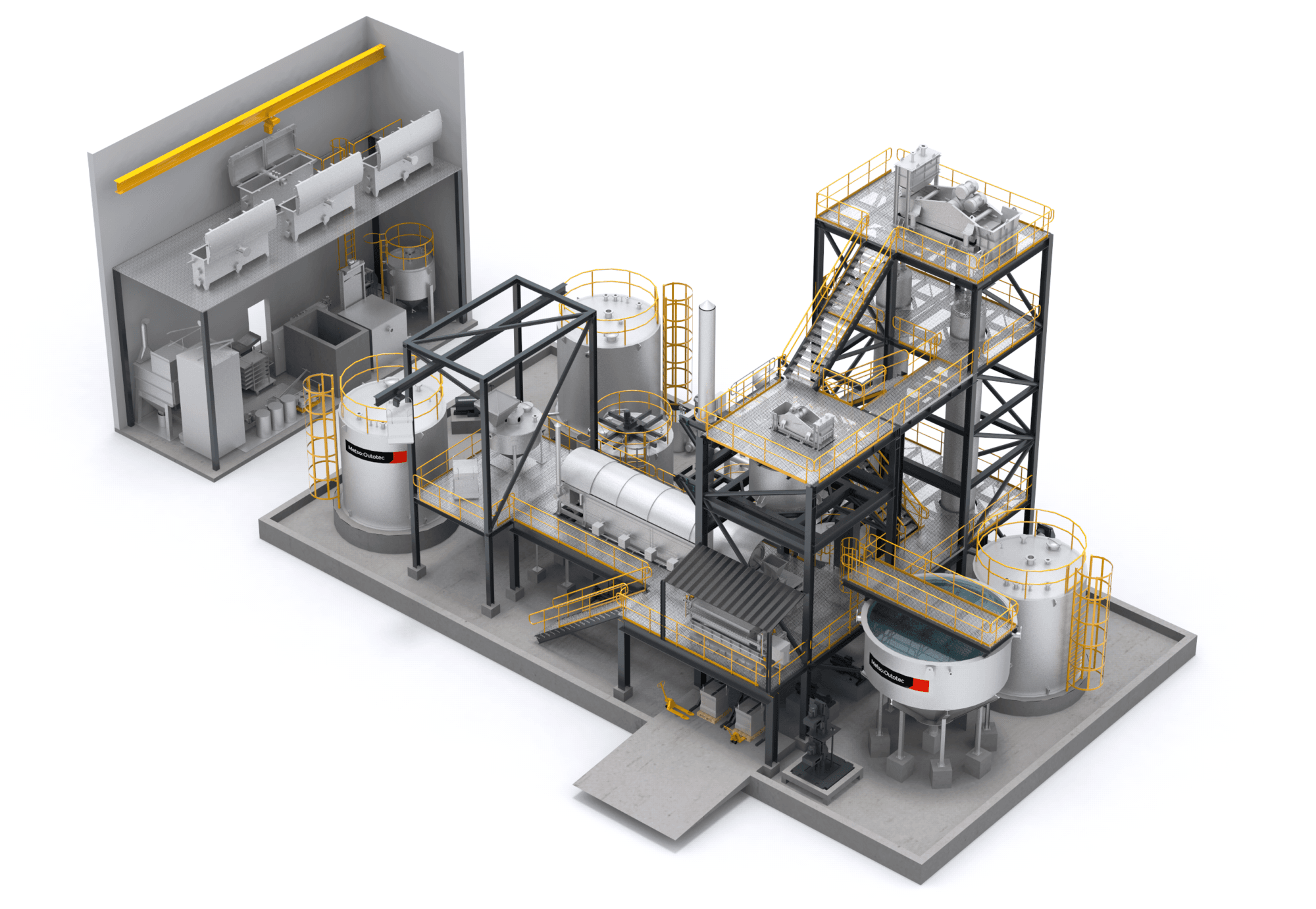
The design needs vessels, containment, drainage and solution storage; pumping and recovery equipment; safe chemical storage and handling; sampling; and a managed residue route. An elution arrangement is needed where gold is collected on carbon. Obtain terms for a toll facility or owned plant before assuming loaded carbon is cash.
Prepare a water balance that includes rainfall and abnormal conditions. Liner selection, pond capacity, leak response and structural design require engineering. A drawing of a lined vat alone does not establish that the site can contain its complete solution inventory.
Confirm approval and operating responsibilities
Have the relevant authorities confirm licensing, environmental and chemical requirements for the actual activity. Use the Cyanide Code as a management reference where appropriate, together with specialist procedures, training and emergency planning.
Assign responsibility for sampling, inventory, maintenance and operating decisions. Keep batch records linking incoming material to residue, solution, carbon and final settlement. This is how you distinguish lower feed grade from a process loss or delayed gold inventory.
Questions and answers
Does a good bottle-roll result prove that a vat will achieve the same recovery?
It demonstrates response under that test's conditions, while a vat also depends on solution movement through the loaded material. Ask for tests representing the proposed preparation, permeability and batch cycle. Compare final-product recovery and elapsed time so the economic model does not treat an agitated laboratory result as a full-scale vat result.
Is gold on loaded carbon the same as money available to run the next batch?
Loaded carbon is an intermediate inventory until it has been treated and the gold settled. Include transport, sampling, elution charges, custody and payment timing in the batch model. Otherwise a technically successful batch may still leave too little cash for the next loading and operating cycle.
Prove the batch before building the site
Establish representative grade, material rights, contaminants and vat-specific process response, then cost the whole batch cycle and final-product route. If permeability or handling prevents reliable operation, compare another process before committing to construction. Your next step is a mapped tailings inventory and a test brief that answers those uncertainties.
Sources and scope
References were reviewed on 5 October 2026. The batch calculation is hypothetical. Site design, chemical settings and approvals require project-specific professional assessment.